EU Project Pravo-Justice together with the Association of Private Enforcement Officers of Ukraine held a Conference on the Development of Professional Self-government
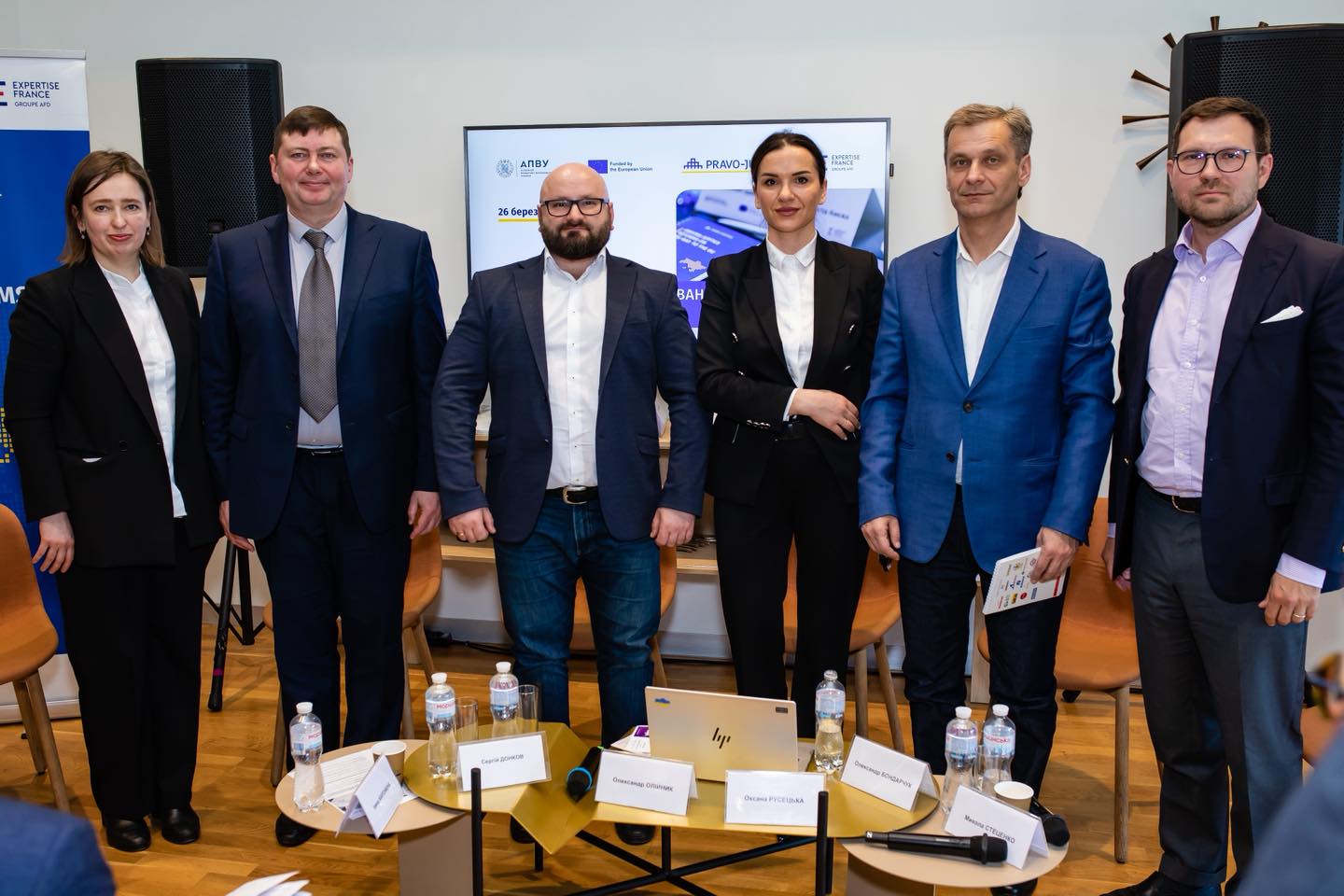
On 26 March, EU Project Pravo-Justice, together with the Association of Private Enforcement Officers of Ukraine, held a conference “Professional Self-Governance: Times of Challenges and Changes”. The discussion was attended by MPs, representatives of the Ministry of Justice of Ukraine, self-governing organisations, and NGOs of professional communities.
The event aimed at discussing the principles of development of professional self-government in the judiciary, including approaches to its legal regulation, distribution of powers between the state and professional communities, and the formation of uniform rules for professions. Particular attention was paid to the public and international context of self-government – interaction with the state, society, and international professional communities, ensuring access to the profession and professional development as the basis for quality and trust, adherence to professional ethics in times of war, as well as the role of self-governing organisations in supporting their members and representing Ukraine internationally.
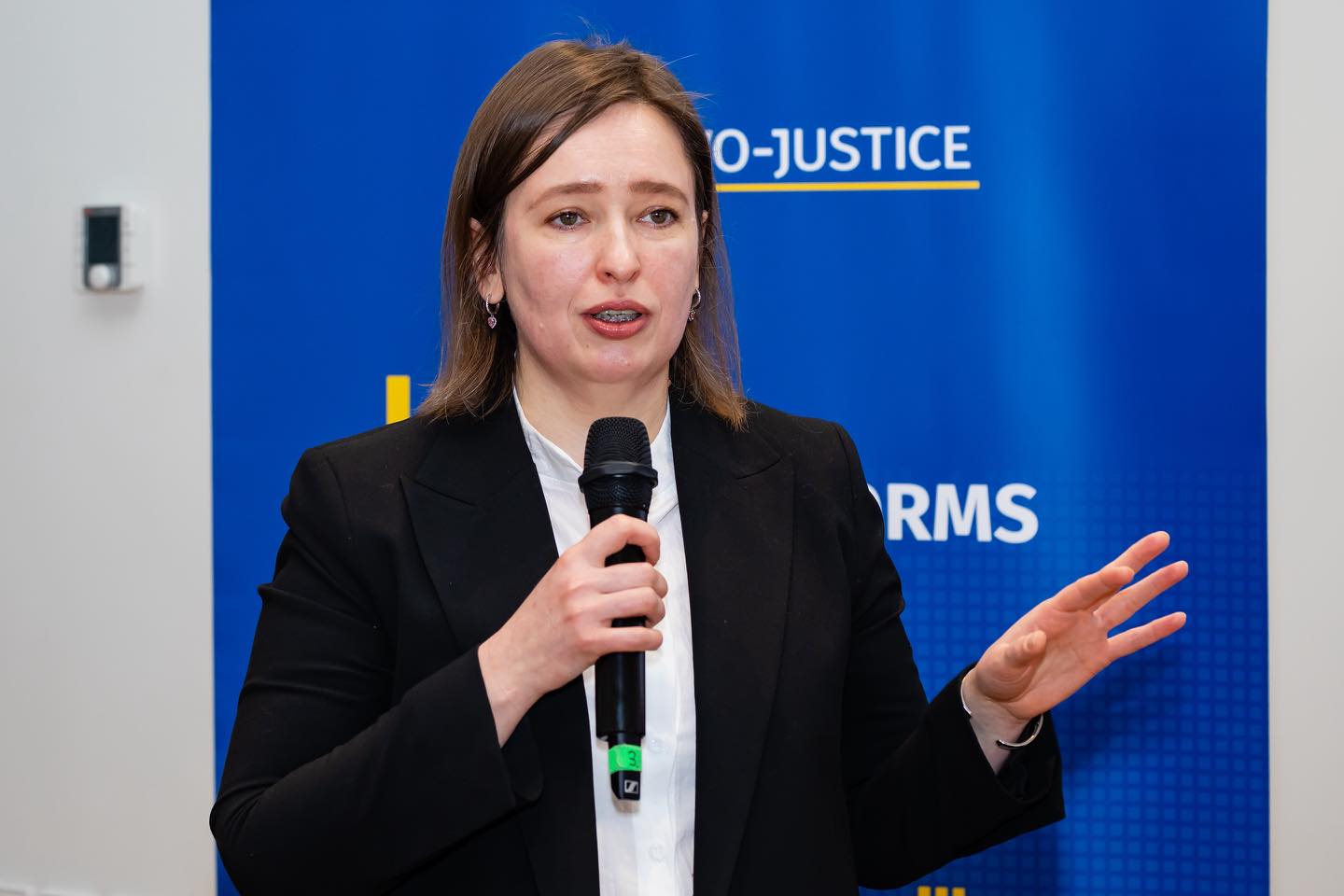
“The event, launched several years ago, has now brought together numerous professional communities. It has become an important platform for discussing topical issues and sharing experience in the field of self-governance in the justice sector. The event promotes the unification and development of professions, as well as the search for unified approaches to self-governance, as they are all an integral part of the effective functioning of the justice system,” said Iryna Zharonkina, Enforcement and Protection of Property Rights Component Lead at EU Project Pravo-Justice.
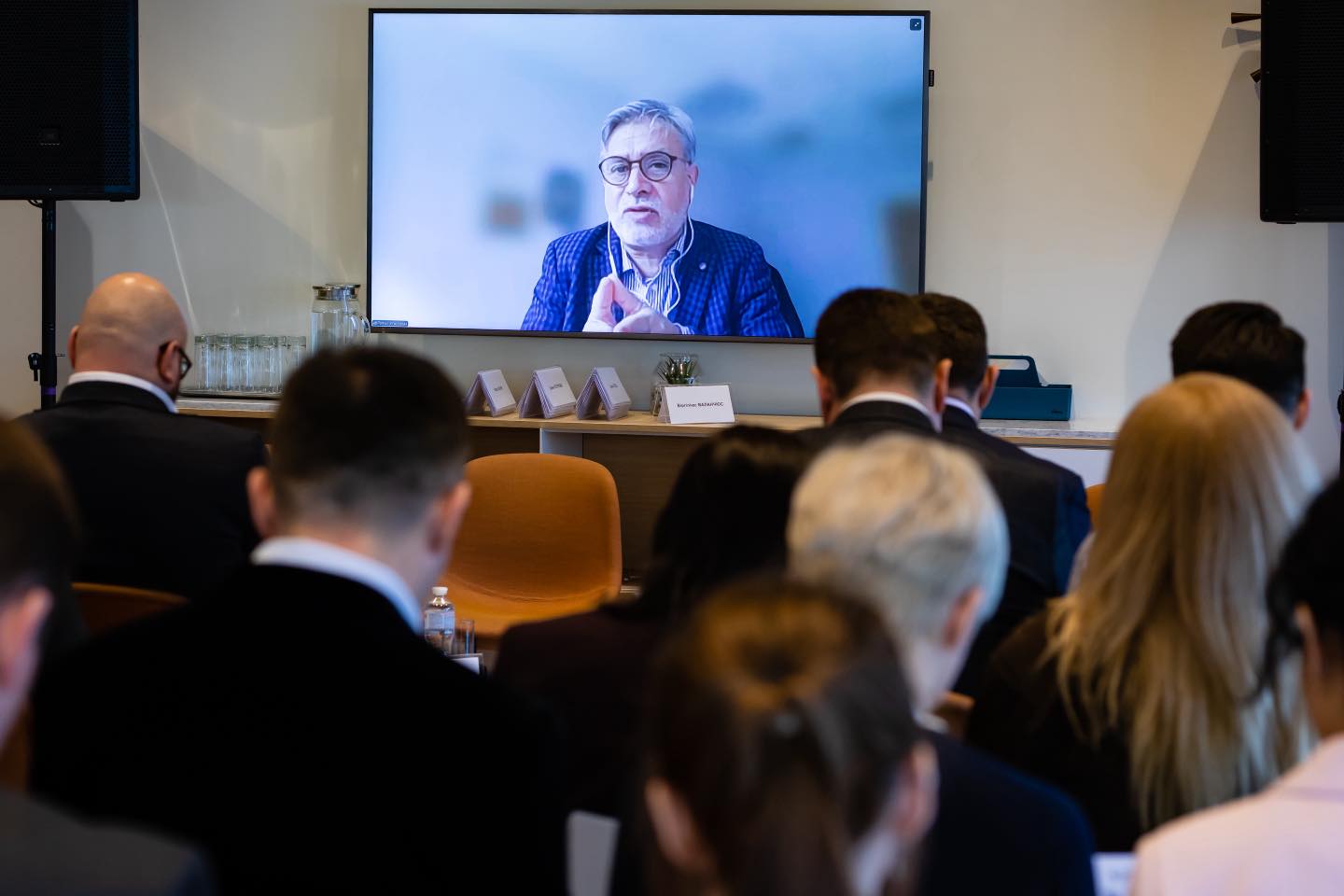
Asier Santillán, Head of Section for European Integration, Governance, Rule of Law and Civil Society at the EU Delegation to Ukraine, emphasised that developing and strengthening professional self-governing organisations should be among the state's key priorities, particularly in the context of European integration.
“The development of strong professional associations has a direct impact on the quality of reforms and progress towards European standards in the justice sector. We must therefore continue to advance and refine approaches to strengthening the role of professional communities, while also building an effective and transparent justice system that citizens can trust,” said Asier Santillán.
Ihor Fris, Member of the Ukrainian Parliament, Member of the Verkhovna Rada Committee on Legal Policy, expressed his opinion on the need to enshrine unified approaches to self-regulation in professional communities at the legislative level.
“Today, it is important to eliminate different rules for self-regulatory organisations in different legal professions and to enshrine a unified approach in the law. Entry to and practice of a profession should be based on clear and uniform rules that allow for cooperation amongst all. At the same time, it is advisable to transfer most of the functions to self-governing organisations, leaving the state with only the role of control. The main thing is to strike a clear balance between self-government and state supervision,” said Ihor Fris.
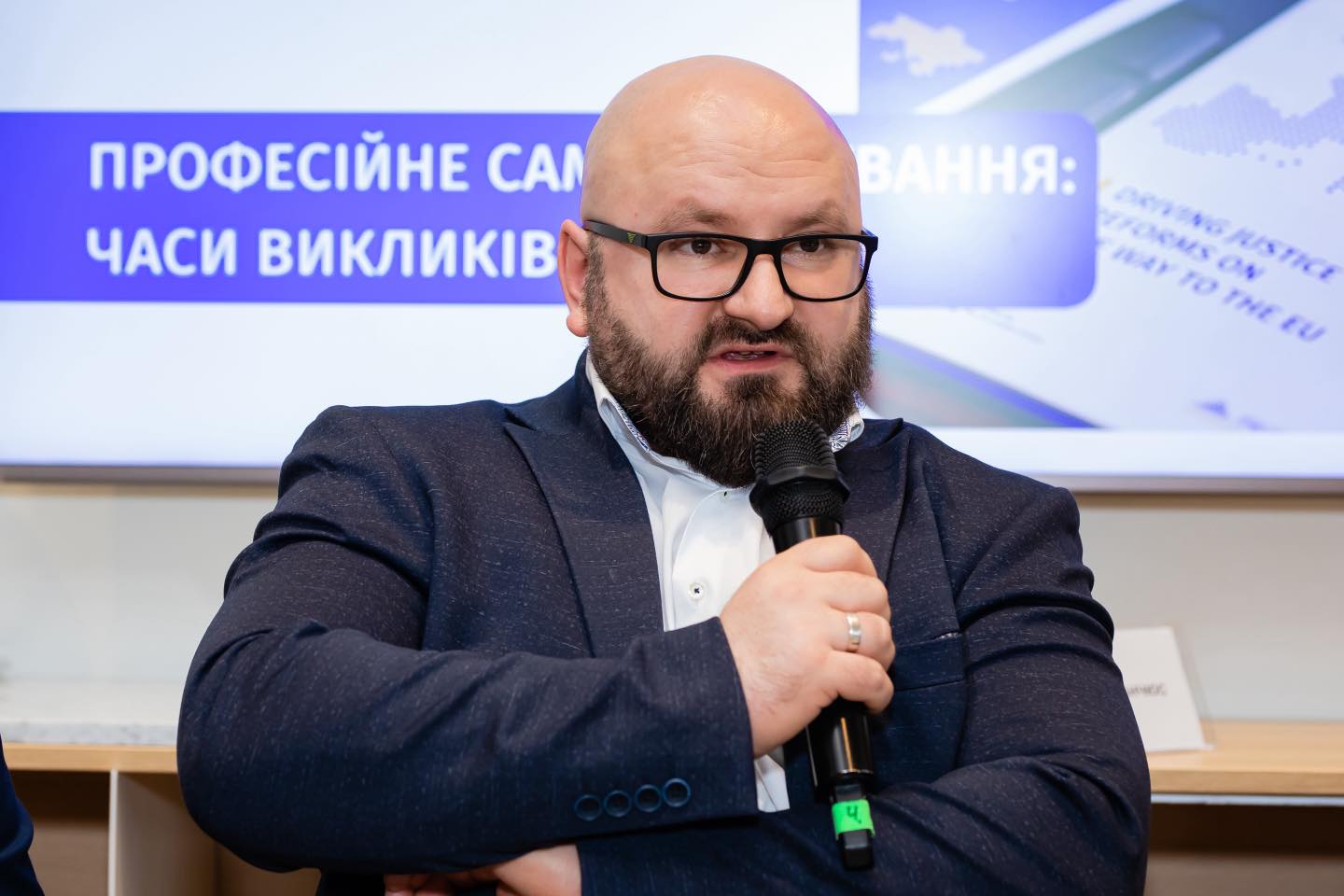
Oleksandr Oliinyk, Director of the Directorate of Justice and Criminal Justice of the Ministry of Justice of Ukraine, focused on the practical issues of implementing this balance, in particular, the limits of delegation of powers and the role of the state in responding to possible abuses.
“Self-governing organisations in the legal professions are not just associations, but communities to which the state delegates some of its functions. That is why balance is of key importance: on the one hand, the expansion of self-government powers; on the other hand, the preservation of the state's ability to respond to abuses. If such an organisation gets out of control, the state must have appropriate tools for response, because it is about performing state functions and protecting the interests of citizens,” said Oleksandr Oliinyk.
Serhii Donkov, Director of the Bankruptcy Department of the Ministry of Justice of Ukraine, drew attention to the need for gradual and balanced development of the professional self-government system, taking into account the real capacity of the associations.
“Full delegation of all functions to the self-government requires sufficient institutional capacity, resources, and management infrastructure. At the same time, a significant room for development is already available within the existing powers of professional associations, which in practice are involved in training, professional development and rule-making. Further development should be gradual – through expanding the role of self-governing organisations while maintaining state control,” said Serhii Donkov.
Oksana Rusetska, Head of the Association of Private Enforcement Officers of Ukraine, stressed the importance of building effective self-government through the active participation of the entire professional community.
“Self-government should be formed bottom-up and be based on the involvement of every member of the professional community. It is the activity of regional units, committees, and all members that determines its strength and effectiveness. In this context, it is important for private enforcement officers to develop the approaches laid down, among other things, in draft law 5660, which envisaged strengthening the role of the professional community in self-government,” said Oksana Rusetska.
Oleksandr Bondarchuk, Chairman of the Ukrainian National of Insolvency Trustees Association, stressed that professional self-government today goes far beyond formal organisation. First of all, it is about the ability to set rules, ensure compliance with standards and be responsible for their implementation.
“This is a daily practice for insolvency practitioners in the context of conflicts of interest, limited resources and high sensitivity of bankruptcy procedures. The war has only increased the requirements for institutional maturity of professional communities, in particular, in terms of maintaining standards, continuity of procedures, and participation in elaborating changes to legislation. Therefore, the transition from the model of subordination to the state towards partnership, as well as strengthening interprofessional interaction and solidarity, is no longer a matter of choice, but the next inevitable stage of development,” said Oleksandr Bondarchuk.
Volodymyr Marchenko, President of the Notary Chamber of Ukraine; Mykola Stetsenko, President of the Ukrainian Bar Association; Iryna Ped, Chair of the Executive Board of the Confederation of Non-Public Forensic Experts and Forensic Institutions of Ukraine; Ruslan Vlasiuk, Member of the Board of the NGO “Registrars’ Community”, presented their views on the pro-European and effective development of professional self-government, as well as on the role of NGOs that unite professional communities.
To conclude, the conference participants noted that the event provided an opportunity to share experiences, discuss practical steps to develop professional self-government in various legal professions, outline the balance between the role of the state and self-governing organisations, alongside ways to strengthen their interaction and institutional capacity.