Penitentiary System Reform: From Punitive Towards Humanitarian Approach
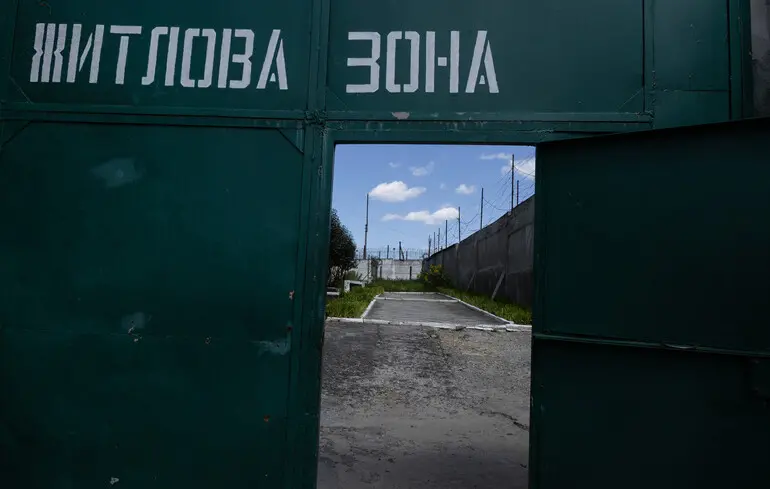 The war has changed the country’s priorities, but it has not eliminated the need for reform. The penitentiary system is one of those areas where delay only exacerbates the problems. It covers about 45,000 people serving sentences in prisons and pre-trial detention centres, more than 60,000 people serving sentences without isolation from society, and almost 50,000 employees. The system should not only be a tool for control, but also an environment for rehabilitation and development. This approach is in line with European values and Ukraine’s commitments, including those set out in the Rule of Law Roadmap.
The current law “On the State Criminal Executive Service” (2006) is long outdated: it does not take into account the establishment of a probation system, modern medical and human resources standards, or respect for basic human rights. As of today, a new draft law on the penitentiary system has been developed, which should lay down a pro-European vector for the development of the sector. During its preparation, it took into account, in particular, the recommendations provided by the experts of EU Project Pravo-Justice. They offer six key approaches that can make the penitentiary system more modern, efficient, and rehabilitation-oriented.
Probation outside the shadow of the prison system
Probation is an alternative to prison: supervision, assistance, and support from society for offenders to reform without isolation. Last year, Ukrainian probation celebrated its tenth anniversary. During this time, it has proved its effectiveness, but it still remains a secondary component of the justice system. As part of the penitentiary system, probation receives minimal resources: funding is primarily used to maintain prison infrastructure.
European experience demonstrates a different approach. In many countries, probation operates as an independent body with its own policy, budget, and staff. This makes it possible to separate probation from the penal system and work at the intersection of justice and social work. Probation services build partnerships with courts, communities, educational and social institutions. Their task is not just to monitor a person serving a sentence without isolation from society, but also to help them change their life trajectory.
Strengthening the institutional capacity of probation in Ukraine, in particular through the creation of a separate central body is not only a matter of choosing a model of justice, but also a way to fulfil European integration commitments. The Rule of Law Roadmap states: Ukraine should reduce the share of custodial sentences and make wider use of alternatives, such as probation supervision, community service, fines, and electronic monitoring. In other words, the EU expects Ukraine to build a system that focuses less on punishment and more on rehabilitation and public safety.
In this sense, probation is a bridge between punishment and a chance for change, between control and support. Thus, it will have to be strengthened if Ukraine really wants to follow the European path.
Healthcare in prison is the same as in the outside world
Approaches to healthcare in prisons also need to be reformed. Currently, medical care for prisoners and detainees is provided by the State Institution “Health Care Centre of the State Penitentiary Service of Ukraine”, which is subordinated to the Ministry of Justice. In practice, this means that a person, once behind bars, seems to “fall out” of the state health care system. His or her declaration with a family doctor ceases to be valid, and the data in the eHealth electronic system becomes inaccessible to the institution’s doctors. As a result, the doctor is forced to act almost blindly, without having complete information about the patient’s chronic diseases or physiological characteristics. This creates risks not only to the health but also to the lives of convicts/detainees, as a gap in data can result in tragedy.
International standards enshrined in the documents of the Council of Europe and the WHO suggest a different approach: the healthcare system in prisons should be integrated into the national healthcare system under the coordination of the Ministry of Health. This is not just about changing the sign on the door - it is about guaranteeing three key things. Firstly, continuity of treatment: a person with diabetes, tuberculosis, or HIV should receive the same treatment as in the outside world. Secondly, access to eHealth: no health information is lost, and the patient’s “medical history” is not interrupted once he or she gets behind bars. Thirdly, the independence of the doctor: the doctor is not administratively subordinated to the head of the institution, and therefore can act in accordance with professional ethics and the needs of the patient.
Of course, such changes do not happen overnight. However, a phased transition, in which medical institutions of the penitentiary system are gradually integrated into the general network of the Ministry of Health, is quite realistic. At the same time, the key is the readiness of the Ministry of Health to take over the coordination of this process and ensure that the new units meet general healthcare standards.
Zero tolerance for torture
Despite the progress in reforming the penitentiary system, cases of ill-treatment of prisoners still occur in places of detention. Some of these complaints remain unaddressed, which calls into question the ability of the state to fully guarantee dignity even in a situation of deprivation of liberty.
The situation can be changed by establishing clear and transparent response algorithms. Reports of torture should go straight to the law enforcement agencies instead of being “lost” in the administrative hierarchy. Otherwise, it resembles a situation where one knocks on the door while the person, they are complaining about opens it. Therefore, investigations of such cases should be not only internal, but also independent, with guarantees of protection for complainants and evidence.
The system should promote an approach based on the principle of zero tolerance for violations. This means the following logic: good behaviour by staff should be rewarded, while any deviation from standards should be immediately addressed with independent investigation and clear responses.
SIZOs as a stumbling block to reform
Pre-trial detention centres remain one of the most problematic parts of the system. They are the most frequent reason for Ukrainians to apply to the European Court of Human Rights. People complain about overcrowded cells; lack of air, light and space; lack of bomb shelters that could accommodate all prisoners and staff. What may seem like “everyday inconveniences” to some, international law considers inhuman or degrading treatment.
The state must respond to these challenges. The obvious way is to upgrade the infrastructure. A decision has already been made to build a new detention centre in Kyiv region, which should relieve the Kyiv SIZO. However, isolated steps are not enough: a systematic programme is needed to replace outdated “monstrous detention centres” with modern, smaller ones with proper conditions.
The long duration of pre-trial investigations also causes overcrowding in SIZOs. Suspects are often held in pre-trial detention for longer than their actual sentence after conviction. This is not only unfair, but also overloads detention centres and undermines confidence in the judiciary. A solution could be to legislate pre-trial investigation time limits and monitor their compliance.
Another option is the wider use of electronic monitoring as a preventive measure. This would allow for a real reduction in the number of people in pre-trial detention centres, while maintaining a balance between human rights and public safety.
Staff are agents of change, not “jailers”
The penal system cannot be effective without the people who work in it. Today, this profession remains invisible and at the same time extremely difficult: low prestige, high workload, and limited opportunities for development.
Ukraine should start by changing the logic of staffing penitentiary institutions. The traditional model, when the number of staff is determined only through the ratio to the number of convicts, has long been out of step with reality. It does not take into account the differences between institutions, the levels of dangerousness of prisoners or the complexity of cases. Instead, European countries use a different approach – the calculation of workload. It is based on an assessment of risks and tasks: from the number of complex cases and pre-trial reports prepared (for probation) to the specifics of working with prisoners in places of detention.
This means that prisons holding people convicted of serious and especially serious crimes should have more staff than those for first-time offenders. Juvenile correctional facilities always have more staff than adult facilities.
At the same time, the new law should guarantee a full cycle of professional development for staff: quality training, a mentoring system, career opportunities, social guarantees and decent pay. After all, it is up to the staff of the penitentiary system to decide whether punishment will become a point of final breakdown or a chance for a new beginning.
Profession behind bars: benefits for people, business, and the state
Returning a person to society after serving a sentence is always a challenge. Without education, a profession or at least basic skills, most released prisoners have no chance of finding a foothold in civilian life. They again find themselves without a job, stable income – and often re-offend. This is a vicious circle that drains both the individual and the resources of the state.
There is a way out – proven by European practice: work and vocational training directly within the walls of the detention facilities. A person behind bars should be trained in a job that is in demand in the labour market: from sewing and construction to metalworking or even coffee bean processing. This provides not only a salary and work experience, but also the most valuable thing – a chance to be released with a sense of dignity and professional prospects.
For such a model to work effectively, close cooperation between the state and business is required.** Ukrainian companies benefit from engaging correctional institutions as partners: access to a stable workforce, the ability to organise production at lower costs, and a social bonus – the image of a responsible business. To encourage companies that support such programmes, the government can introduce tax incentives.
As a result, everyone wins: business gets motivated employees and the opportunity to expand production; the state saves money that used to be spent on the maintenance of convicts and reduces the risk of recidivism, as people who have learned a trade are more likely to return to normal life; society gets fewer new crimes and more citizens who have skills and a chance for a decent life after leaving prison.
Not later, but now
The new draft law on the penitentiary system can become the basis for a qualitative transformation of the entire penitentiary sector. It is extremely important that during its consideration in parliament, the document does not lose, but rather gains, effective mechanisms that meet European standards. It is not only about formal changes, but also about creating a modern system that combines human rights protection, public safety and the effective functioning of institutions. The involvement of expert advice, including recommendations, will make the reform more solid, balanced and effective.
It is necessary to start working on this today, because delaying the update of the legislation only preserves outdated approaches and deepens systemic problems. Right now, the state has a unique chance to lay the foundation for a modern, humane, and fair penitentiary system - one that meets the values and standards of the European Union.
Olena Kochura, Key Expert on Reforming the Penitentiary System and Probation at EU Project Pravo-Justice