Strategic Session on Developing a Roadmap for Implementation of Veteran Policy in the Probation System Held with the Support of EU Project Pravo-Justice
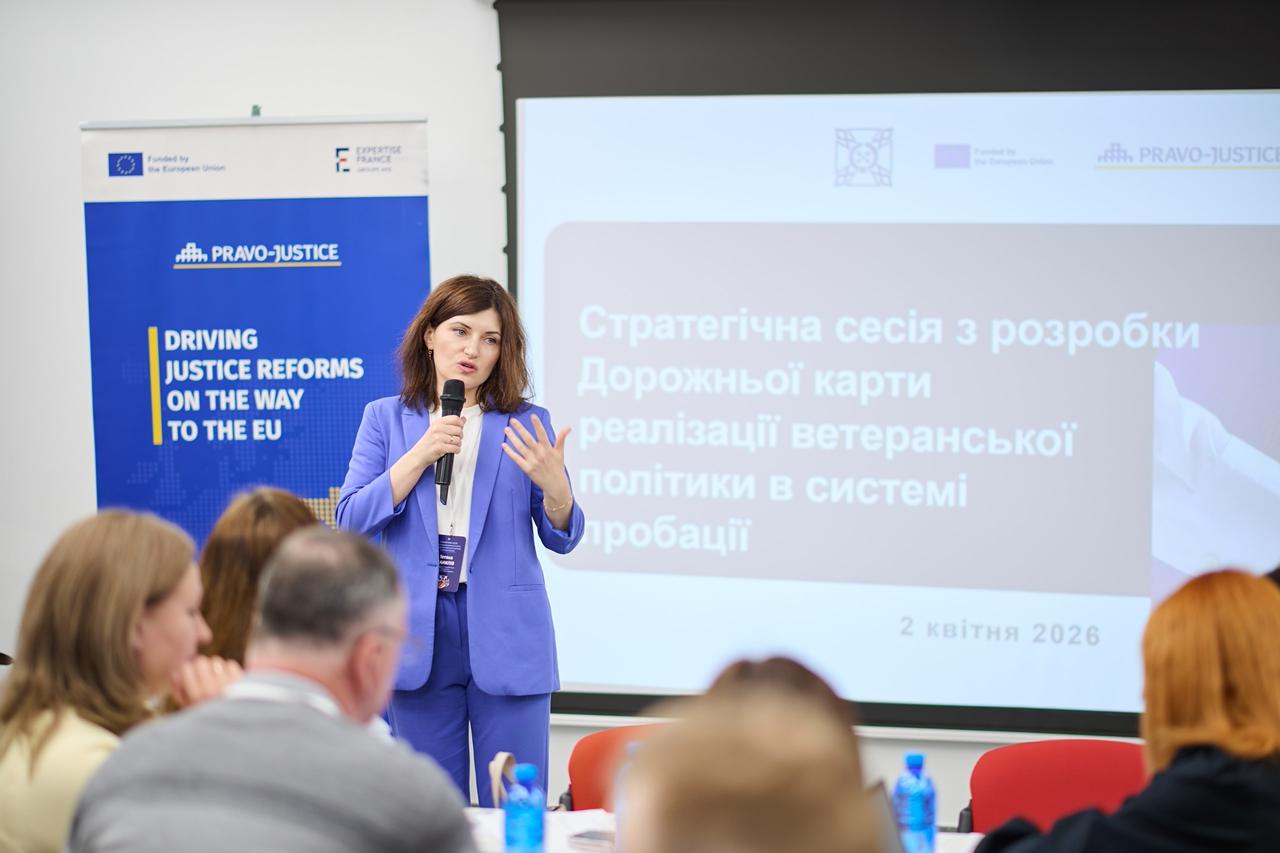
On 2 April, a strategic session was held to develop a Roadmap for the implementation of veteran policy in the probation system. The event was organised by the State Institution “Probation Center” with the support of EU Project Pravo-Justice and in cooperation with the NGO L.E.A.D. Foundation.
The session was aimed at engaging key stakeholders in a joint discussion of priorities and approaches to implementing veteran policy using participatory methods, as well as strengthening coordination between the State Institution “Probation Center”, its regional units, and partners. Particular attention was paid to developing strategic and operational goals to increase the capacity of the probation system to work comprehensively with veterans.
Representatives of the Ministry of Justice of Ukraine, the Ministry of Veterans Affairs, the State Institution “Probation Centre”, the expert community, and veterans themselves joined the discussion and developments. Facilitation and methodological support have been provided by Tetiana Danyliv, Strategic Planning Expert at EU Project Pravo-Justice, and Olena Kochura, Key Expert Reforming the Penitentiary System and Probation at EU Project Pravo-Justice.
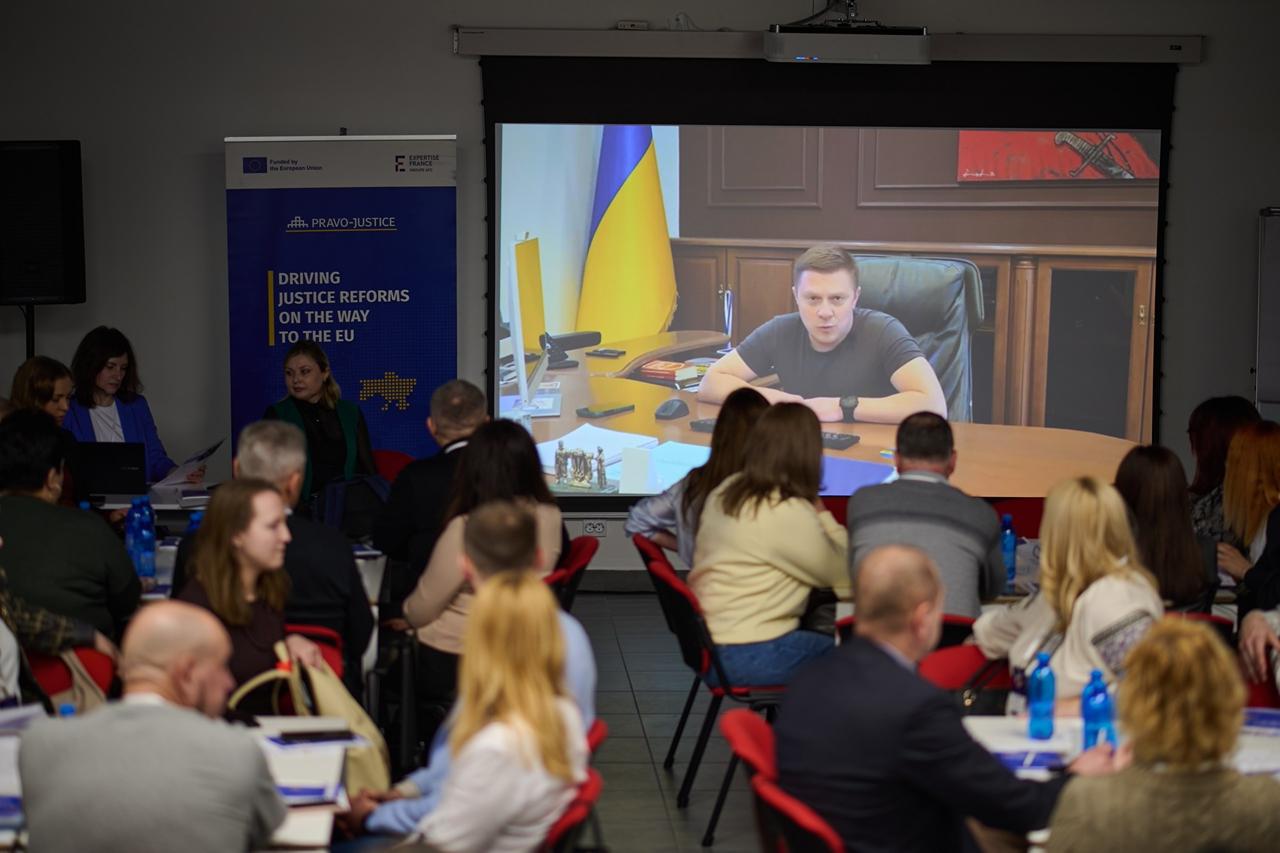
“Veteran policy is among the main priorities of both the Ministry of Justice of Ukraine and the State Penitentiary Service. At the same time, it is important to make sure it is implemented in a comprehensive manner and more broadly than through separate programmes or individual efforts. Each of our defenders should be provided with decent treatment and decent chances for resocialisation and reintegration,” said Yevhen Pikalov, Deputy Minister of Justice of Ukraine.
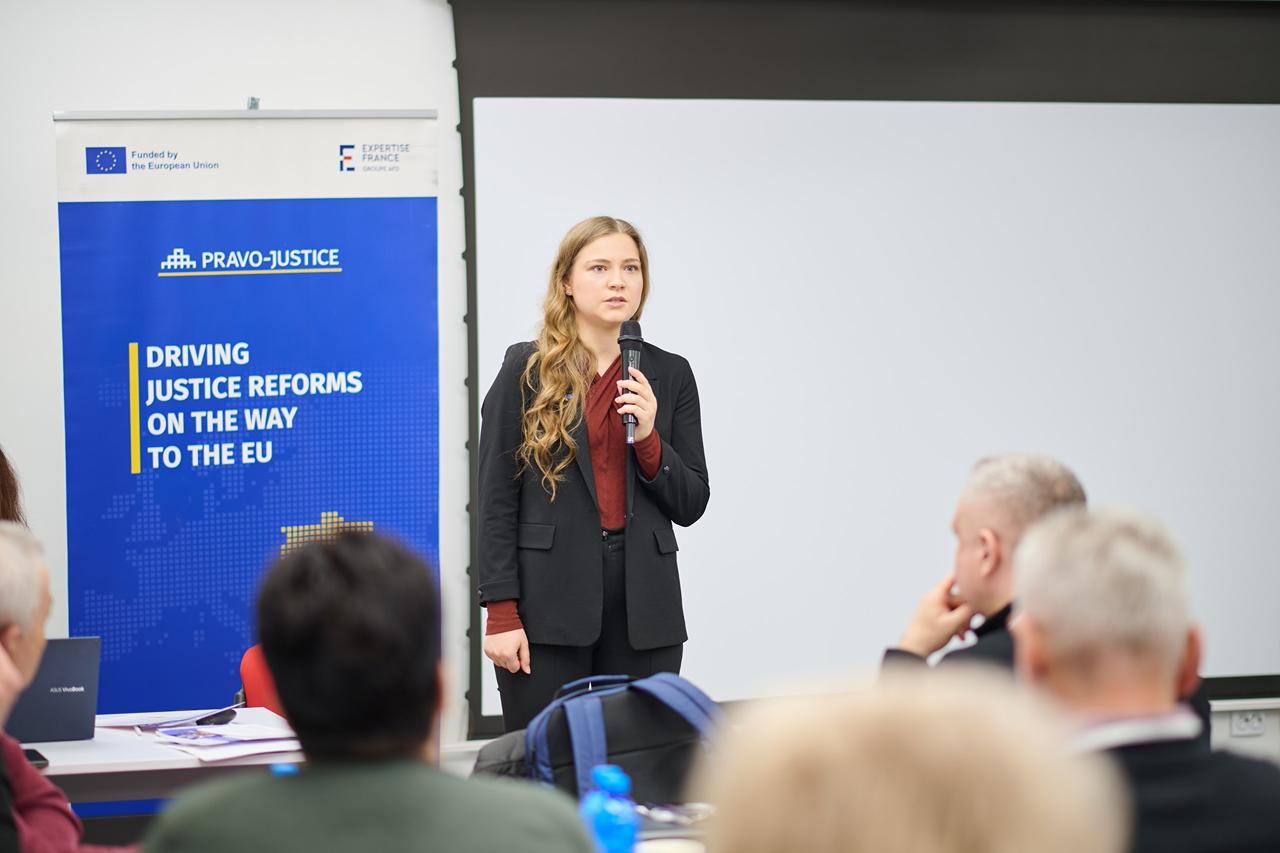
In her turn, Olha Sribniak, Deputy Team Leader of EU Project Pravo-Justice, stressed that the growing number of veterans among probation clients requires a systematic response. According to her, the future Roadmap should become a practical tool for coordination between all stakeholders.
"European practice shows that effective probation is based on an individual approach and consideration of the needs of various client groups. At the same time, the tools currently used by probation do not always take into account the experience of veterans, including traumatic experiences and reintegration. That is why the development of the Roadmap is very well-timed," said Olha Sribniak.
Mykola Rudyk, acting director of the State Institution “Probation Center”, emphasised the importance of developing individual approaches to working with veterans in the probation system.
“Probationers, who are veterans, need not only standard support, but also more individualised assistance. It is important to take into account their combat experience, psychological state, and rehabilitation needs. The main task of the strategic session is to move from theoretical discussions to concrete decisions and formulate a clear action plan,” added Mykola Rudyk.
Lesia Kliarovska, co-founder of the NGO L.E.A.D. Foundation, stated the need to develop a therapeutic justice approach in Ukraine that would combine legal mechanisms with social support and rehabilitation.
“Veterans are bearers of a positive duty. Our mission as a civil society is to take this into account and help them to go through the process of returning. That is why there are so much hope for the probation system,” said Lesia Kliarovska.
During the strategic session, the participants focused on the comprehensive elaboration of the key elements of the future Roadmap for the implementation of veteran policy in the probation system. In particular, a list of stakeholders and beneficiaries involved or interested in implementing the relevant approaches was developed. Particular attention was paid to developing a common vision of existing challenges and problems in this area, as well as to verifying strategic goals that should determine the next steps in policy implementation. In addition, the participants developed a draft logical model of the Roadmap, which provides for the structuring of operational goals and specific tasks to achieve them.
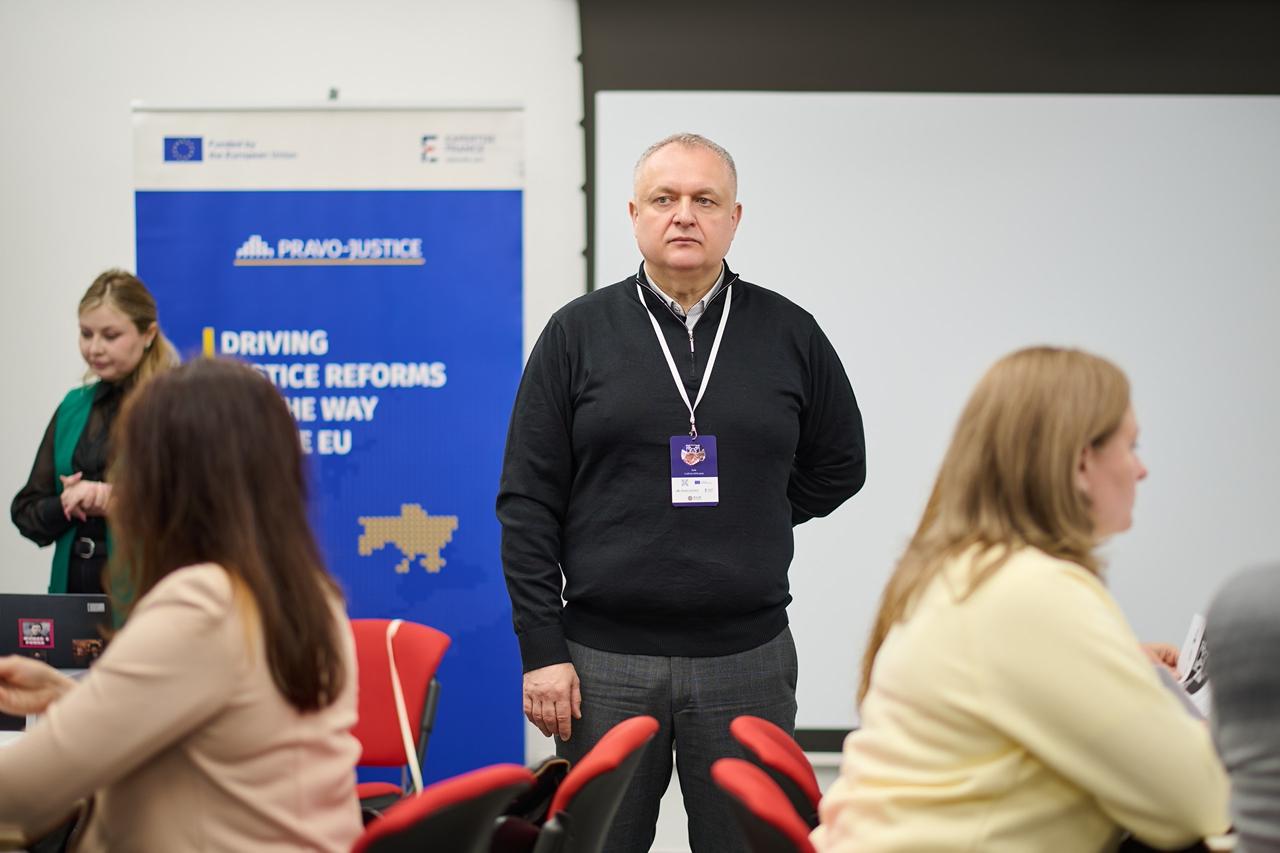
“As a result of the strategic session, we have a draft Roadmap. It is based on the opinions of specialists who work directly in the probation system in different regions of Ukraine and have a good understanding of its specifics, as well as veterans and the expert community. This is an important step, but the document still needs polishing – clarification of the terminology; agreeing on wording, and specifying certain provisions. At the same time, it is already clear that we are moving towards creating a practical tool that should provide practical results,” summarised Anatolii Osadchyi, Deputy Director for Veteran Policy at the SI “Probation Center”.